
TZ2 30mg

$55.00

GLP2-T is a synthetic peptide supplied exclusively for laboratory research applications and is provided in lyophilized form to support product stability and long-term storage under appropriate laboratory conditions.

Out of stock

GLP2-T is a synthetic peptide produced using solid-phase peptide synthesis and purified to a high level of analytical purity. This material is supplied exclusively for laboratory research applications and is provided in lyophilized form to support product stability and long-term storage under appropriate laboratory conditions.

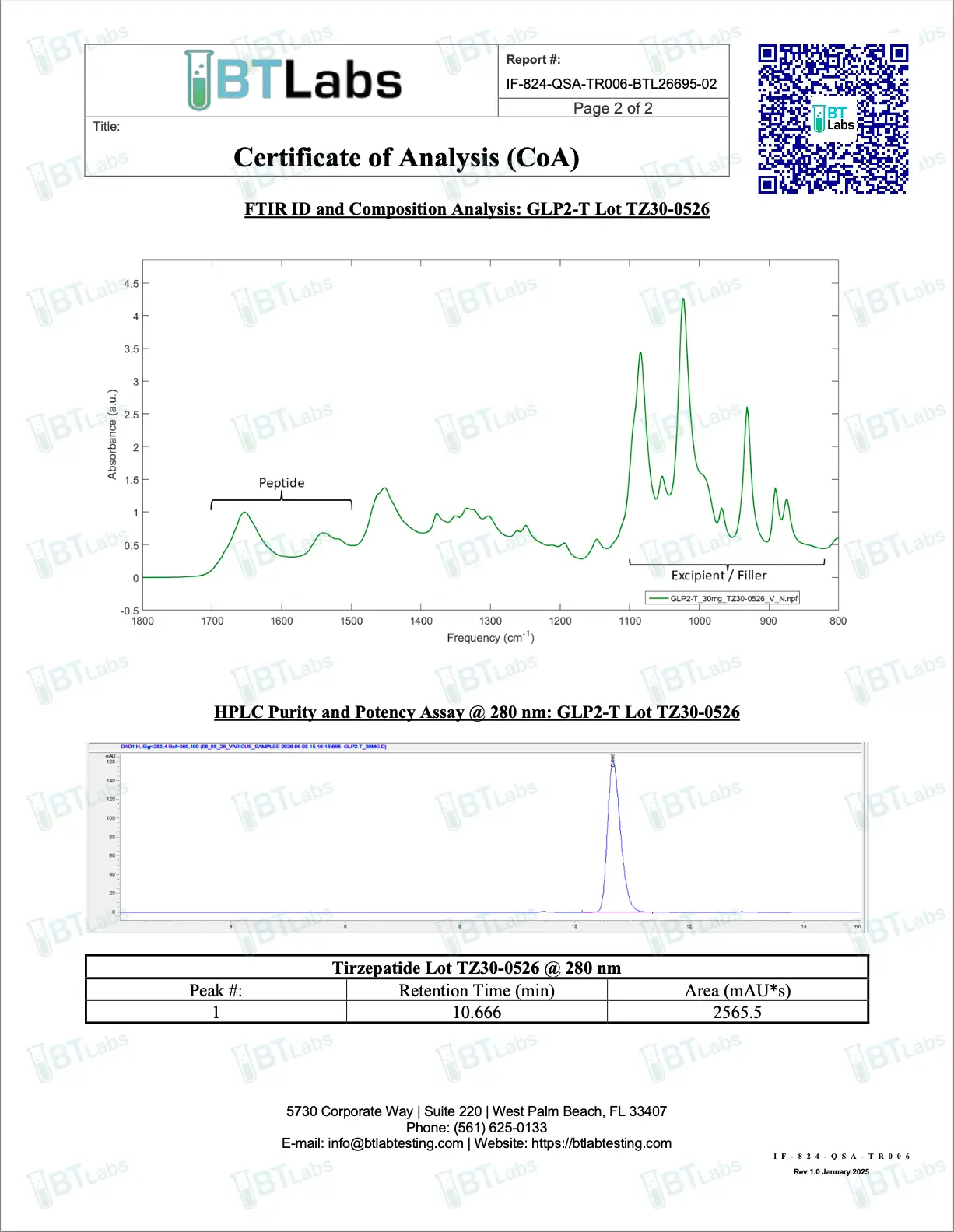
Each batch of GLP2-T undergoes rigorous quality control procedures, including analytical testing to verify identity, purity, and consistency. Comprehensive quality documentation, including Certificates of Analysis, is available to support research and laboratory validation requirements.

  • Product Name: GLP2-T

  • CAS Number: 2023788-19-2

  • Molecular Formula: C₂₂₅H₃₄₈N₄₈O₆₈

  • Molecular Weight: ~4813.45 g/mol

  • Appearance: White to off-white lyophilized powder

  • Purity: ≥98% (HPLC)

  • Form: Lyophilized powder

  • Solubility: Soluble in appropriate laboratory solvents

  • Storage Conditions: Store at −20°C or below

  • Stability: Refer to Certificate of Analysis for lot-specific stability data

GLP2-T may be used as a reference peptide or investigational material in laboratory research settings, including but not limited to the following areas:

Receptor Interaction and Ligand Binding Studies

  • Ligand–receptor binding assays

  • Receptor affinity and selectivity characterization

  • Receptor activation and signaling pathway analysis

  • Comparative ligand interaction studies

Cellular and Molecular Research

  • Cell-based assay development and optimization

  • Intracellular signaling pathway investigations

  • Gene expression and transcriptional response studies

  • Receptor internalization and trafficking analysis

Peptide Characterization and Analytical Applications

  • Peptide structural and conformational analysis

  • Stability and degradation profiling

  • Analytical reference standard use

  • Formulation and solubility evaluation

Metabolic and Endocrine System Research Models

  • Hormone signaling pathway research

  • Cellular metabolic pathway investigations

  • Nutrient sensing and signaling research

  • Energy regulation pathway modeling in laboratory systems

Drug Discovery and Preclinical Research Support

  • Assay validation and development

  • Screening platform calibration

  • Structure-activity relationship (SAR) studies

  • Comparative peptide analysis

Laboratory Method Development

  • Analytical method validation (HPLC, LC-MS, etc.)

  • Laboratory assay standardization

  • Reference material comparison

  • Quality control method development