
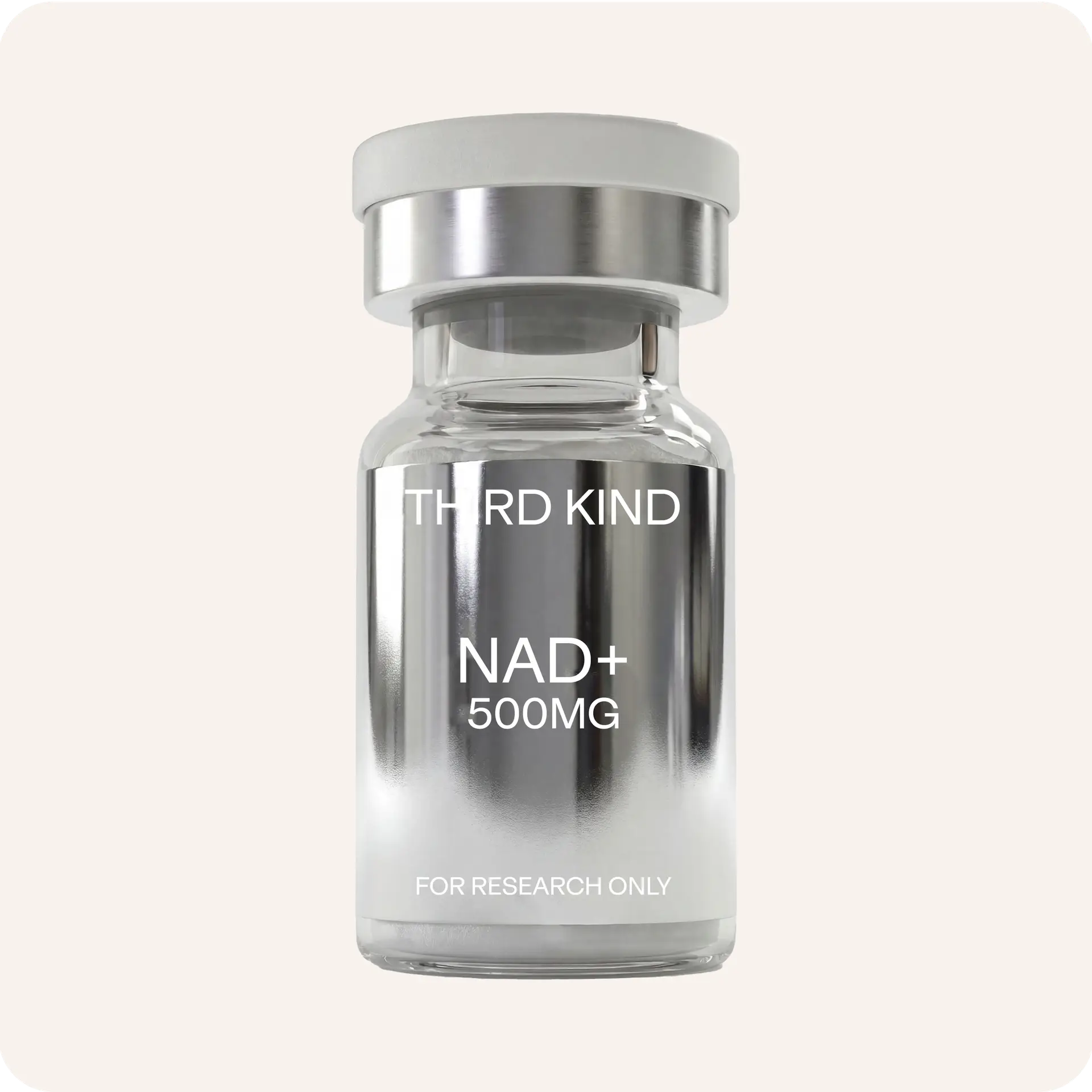
NAD+ 500mg

$45.00

NAD+ (Nicotinamide Adenine Dinucleotide) is a critical coenzyme present in all living cells, extensively studied for its role in cellular energy metabolism and mitochondrial function.

Out of stock

NAD+ (Nicotinamide Adenine Dinucleotide) is a critical coenzyme present in all living cells, extensively studied for its role in cellular energy metabolism and mitochondrial function. As a key electron carrier, NAD+ is essential in redox reactions that drive ATP production and support overall cellular activity.

In research settings, NAD+ has been widely explored for its involvement in metabolic pathways, DNA repair mechanisms, and cellular signaling processes. It also plays a significant role in the activation of sirtuins—proteins associated with cellular regulation, stress response, and longevity-related pathways.

Declining NAD+ levels have been observed in aging models, making it a compound of growing interest in studies focused on cellular aging, metabolic efficiency, and mitochondrial health. Its broad biological relevance has positioned NAD+ as a foundational molecule in a wide range of in vitro and preclinical research applications.

Product Specifications — NAD+ (Nicotinamide Adenine Dinucleotide)

Product Name: NAD+ (Nicotinamide Adenine Dinucleotide)
Compound Type: Coenzyme (Pyridine nucleotide)
Molecular Formula: C₂₁H₂₇N₇O₁₄P₂
Molecular Weight: 663.43 g/mol

Purity: ≥99% (HPLC verified)
Appearance: White to off-white lyophilized powder
Form: Oxidized form (NAD⁺)

Solubility: Soluble in sterile water or appropriate aqueous buffers for research use
Stability: Sensitive to heat, light, and pH; stable under recommended storage conditions

Storage Conditions:

  • Store lyophilized product at 2–8°C (refrigerated)
  • For extended storage, keep at -20°C
  • Protect from light, heat, and moisture
  • Avoid repeated freeze-thaw cycles

Research Applications — NAD+ (Nicotinamide Adenine Dinucleotide)

NAD+ is a vital coenzyme found in all living cells, extensively studied for its central role in energy metabolism, cellular signaling, and redox reactions. Its involvement in multiple foundational biological processes has made it a key compound in a wide range of in vitro and preclinical research models.


Primary Areas of Investigation

Cellular Energy Metabolism
NAD+ functions as a critical electron carrier in metabolic pathways, including glycolysis, the citric acid cycle, and oxidative phosphorylation. It is widely used in research examining ATP production and cellular energy dynamics.

Mitochondrial Function
NAD+ is closely linked to mitochondrial activity and efficiency. Research models often explore its role in maintaining mitochondrial integrity and supporting energy-related cellular processes.

DNA Repair and Cellular Maintenance
NAD+ serves as a substrate for enzymes involved in DNA repair, including PARPs (poly ADP-ribose polymerases). It is commonly studied in models focused on genomic stability and cellular stress responses.

Sirtuin Activation and Cellular Signaling
NAD+ is required for the activity of sirtuins, a class of proteins involved in cellular regulation, metabolic signaling, and stress adaptation. This has made it a focal point in research related to cellular aging and longevity pathways.


Research Value

  • Foundational coenzyme in cellular metabolism and redox biology
  • Widely studied across energy, mitochondrial, and signaling pathways
  • Integral to DNA repair and cellular stress response mechanisms
  • Applicable across metabolic, aging, and cellular resilience research models